
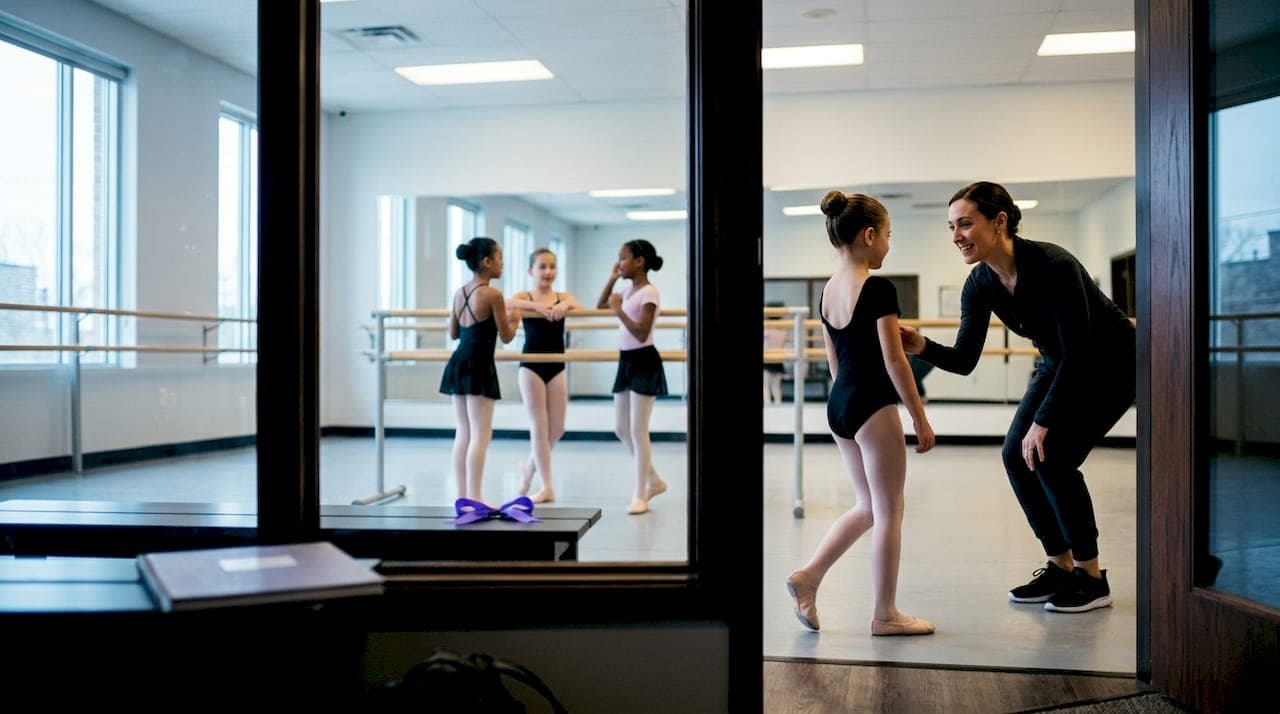
Prioritize a structured first-90-day onboarding plan plus simple attendance-based early-warning flags. These two moves together address most of the churn a studio sees. Start today with a welcome sequence for new families, a flag that triggers after three missed classes, and a short referral push. The rest of this guide breaks each step into something you can build in the next 30 to 60 days.
TL;DR:
- Monitoring attendance flags after three missed classes can significantly reduce early dropout risk, especially when paired with personalized teacher outreach.
- Implementing a clear, automated onboarding process within the first 90 days, including milestone check-ins, boosts long-term student retention.
- Offering flexible scheduling, simple makeups, and automated billing minimizes logistical frustrations that often lead to cancellations.
- Community-building activities like recognition, events, and referral rewards help sustain family loyalty beyond discounts or promotions.
- Focus on retaining students with targeted reactivation campaigns during key seasons, such as back-to-school and New Year, tailored to address families' specific reasons for leaving.
Table of Contents
- Why student retention matters and what to benchmark
- The first 90 days: an onboarding playbook that sticks
- Spotting dropout risk before it happens
- Building the kind of community families don't want to leave
- Removing the friction: scheduling, makeups, and payments
- Reactivation campaigns that bring former students back
- Ten things to implement this month
- Why students actually leave
- Why staff and instructor engagement drives retention
- Matching programs to skill levels and interests
- What actually works when you put this into practice
- How StudioFlare fits into your retention workflow
- Sources
- FAQ
Why student retention matters and what to benchmark
Retention is easier to manage once you have a number attached to it. A simple formula works: take the students enrolled at the start of a period, subtract those who left, divide by the number you started with, and multiply by 100. Monthly churn is the mirror image: the percentage of active students who cancel or lapse within that month.
Industry guidance recommends dance studios target 75 to 80% annual retention, with many studios currently averaging closer to 70%. That gap matters more than it looks. A studio charging $150 a month keeps roughly $1,800 in annual tuition per retained student, so moving even a handful of families from "at risk" to "renewed" changes the yearly numbers more than chasing new sign-ups does. For subscription-style billing, aim for monthly churn under 5%: anything higher usually points to a specific, fixable problem rather than bad luck.
The first 90 days: an onboarding playbook that sticks
Most churn happens early, which is why the first three months deserve their own system rather than a one-off welcome email.
- Day 1: Send a welcome email or text with class times, what to wear, and a staff contact.
- Day 3 to 7: Have the front desk or owner confirm the first class went well and answer questions.
- Week 2: A teacher introduces themselves personally and shares one specific note about the student's progress.
- Day 30: A milestone check-in covering attendance and comfort level.
- Day 60 and Day 90: Short follow-ups that flag any drop in enrollment interest before it becomes a cancellation.
Front desk staff can handle the logistics touches, while teachers own the personal ones. Watch attendance rate, trial-to-paid conversion, and whether parents open or respond to messages during this window.
Pro Tip: Assign one person to own the 30-day check-in. When onboarding is "everyone's job," it quietly becomes no one's job.
Spotting dropout risk before it happens
Retention problems rarely arrive as a surprise. They show up first as small behavioral shifts that most studios never track.
- A student misses several consecutive classes. This pattern is flagged by many industry sources as a reliable early warning sign.
- Parents stop opening messages or responding to billing reminders.
- A payment fails or gets delayed more than once.
A simple automated workflow handles most of this without adding staff hours: a missed-class trigger sends an automatic text, then routes a note to the teacher for a personal call, then offers a makeup class or a private lesson if the absence pattern continues, reflecting best practices in comprehensive security systems for NYC studios. Studios that implement structured onboarding processes see significantly higher retention at six months compared to those without one, illustrating the impact of early engagement. Weekly attendance review, not monthly, catches the pattern while there's still time to act.
Building the kind of community families don't want to leave
Belonging keeps families enrolled longer than any discount does. Year-round perks, small recognitions, and a few well-run events do more for loyalty than most owners expect.
- Recognize enrollment anniversaries publicly, even with something as small as a shout-out in class.
- Host a parent social once a semester so families build friendships beyond drop-off and pickup.
- Start an in-studio club, like a performance team or a mentorship pairing between older and younger students, that gives kids a reason to stay connected.
- Design referral rewards that benefit both sides: a discount for the referring family and a welcome credit for the new one, so the incentive feels mutual rather than transactional.
Pro Tip: Keep the referral reward small but immediate. Families respond more to a fast, visible perk than a large one that takes months to redeem.
Research on teacher relatedness-support behavior found that personalized, caring interaction from instructors raises motivation and lowers the odds a student disengages, which lines up with what most studio owners already sense: kids stay for the people, not just the choreography.
Removing the friction: scheduling, makeups, and payments
A lot of churn has nothing to do with dissatisfaction. It comes from logistics that got in the way once too often.
- Offer more than one time slot for popular classes, and allow cross-enrollment across styles so a scheduling conflict doesn't force a full withdrawal.
- Publish a clear makeup class policy and make swapping a class simple, ideally through self-service booking rather than a phone call.
- Offer flexible payment plans and automate billing so a missed card charge doesn't turn into a canceled enrollment.
- Communicate scheduling and makeup policies clearly at signup, then repeat them before recital season, when conflicts spike.
Automated billing through a processor like Stripe removes one of the quieter causes of churn: the family who meant to update their card but never got around to it before the subscription lapsed.
Reactivation campaigns that bring former students back
Families who leave rarely leave for good. The right timing and message bring a meaningful share of them back.
- Back-to-school (August/September): Offer a free trial week or a returning-student discount tied to the new season.
- New Year: Lead with fresh-start messaging and a low-commitment offer, like one free class before re-enrolling.
- Pre-summer: Highlight summer intensives or camps as a lower-stakes way to re-engage before fall commitment.
Use automated email or text for the broad seasonal push, and reserve personal teacher outreach for higher-value former students. Reactivation offers work best when they directly answer the reason a family left: a payment plan for a cost objection, a new time slot for a scheduling one.
Ten things to implement this month
Start with the highest-impact, lowest-effort items first.
- Set a three-absence flag that triggers automatically.
- Launch a welcome sequence for new enrollments.
- Run a two-week referral sprint with a visible reward.
- Publish a clear makeup and swap policy.
- Add a second time slot for your most requested class.
- Turn on automated billing reminders.
- Schedule 30-day check-ins for every new family.
- Recognize one enrollment anniversary in class this week.
- Send a reactivation text to students inactive over 60 days.
- Review weekly attendance data as a standing agenda item.
The flag, welcome sequence, and referral sprint take the least setup time and produce the fastest visible change, usually within a billing cycle.
Why students actually leave
Most exits trace back to one of four causes, and none of them are mysterious once you look for them.

Scheduling conflicts top the list: a class time stops working with a new school schedule or a sibling's activity, and without an easy swap option, the family just stops showing up. Communication gaps come next. A missed reminder about a schedule change, a costume order, or a recital date can feel like the studio doesn't have its act together, even when the actual teaching is excellent.
Cost is a real driver, but it's rarely the whole story. A family that feels connected to the studio will often ask about a payment plan before they cancel; a family that doesn't feel connected just quietly leaves. That's why the fourth driver, lack of community, tends to compound the other three. Perceived value, teacher support, and social relationships are strong predictors of persistence in dance learning, which means a student who feels invisible in a well-run studio is still at risk, while a student in a slightly chaotic one may stay because they feel like they belong.
The practical takeaway: fix the logistics, but don't assume logistics alone will hold families. Community is the retention layer that makes the others matter less.
Why staff and instructor engagement drives retention
Owners often focus retention efforts on marketing and policy, but the person in the room with the student has more influence over whether that student stays than almost anything else.
Teachers who remember details, offer specific feedback, and greet students by name create the kind of relatedness that research on dance education ties directly to motivation. Instructors who feel disconnected from the studio's goals, underpaid, or overloaded tend to pass that disengagement to their classes, even unintentionally.
That's why staff meetings should include retention data, not just choreography planning. When a teacher knows which students in their class have missed classes recently, they can make the small, personal gesture (a text, a comment after class) that a front-office automation can't replicate. Pairing new instructors with a short onboarding of their own, covering how to greet new students and flag early warning signs, extends the same first-90-days thinking from families to staff.
Retention isn't only a marketing problem. It's a staffing and culture problem that shows up in enrollment numbers months later.
Matching programs to skill levels and interests
A one-size class structure pushes out students at both ends: advanced dancers get bored, and beginners get discouraged. Splitting levels more granularly, even by adding one extra tier between beginner and intermediate, keeps both groups challenged at the right pace.

Interest matters as much as skill. Offering a mix of styles, from competitive team tracks to low-pressure recreational classes, gives students who aren't headed for competition a reason to stay enrolled without feeling like they're on the wrong track. Short-format offerings, like a six-week hip-hop elective or a themed workshop, let students sample something new without committing to a full season, which often turns into a longer-term enrollment once they find a style they like.
Regularly checking in on what students want to learn, not just what level they're at, keeps programming from calcifying around whatever classes were popular five years ago.
What actually works when you put this into practice
Most studios don't fail at retention because they lack ideas. They fail because they try to launch five systems at once and none of them stick. The studios that see real change usually start with one system, run it for a full billing cycle, and only then add the next layer.
Automating a simple attendance flag is often the fastest win: it takes the guesswork out of noticing who's slipping and frees staff to make the personal call that actually saves the enrollment. Pilot one tactic, measure what changed, then expand.
— StudioFlare Team
How StudioFlare fits into your retention workflow
Building the systems in this guide by hand, with spreadsheets and group texts, is possible but slow. The platform was built specifically for dance studios to make the highest-impact tactics automatic instead of manual.

- Attendance tracking that flags three consecutive absences automatically, so no student slips through unnoticed.
- Bulk SMS and messaging for welcome sequences, check-ins, and reactivation campaigns without juggling group texts.
- Automated tuition billing through Stripe, reducing the payment lapses that quietly turn into cancellations.
- Built-in livestreaming so a scheduling conflict doesn't have to mean a missed class.
A good starting pilot: turn on attendance flags and a welcome sequence for your next enrollment cycle, then measure the difference at 90 days. You can explore StudioFlare's plans and start a studio to see how it fits your current systems.
Sources
- The relationship between perceived teacher relatedness-support behavior (RSB) and learning motivation of dancesport students in universities | Scientific Reports
- What's a good churn rate for a dance studio? 2026 benchmarks | Dance Studio Journal
- Dance Studio Retention Marketing: Reactivation + Loyalty Systems | Dance Marketing
- A study on the factors influencing the continuous learning of college students' dance learning under perceived value
FAQ
What counts as a good retention rate for a dance studio?
Industry guidance points to 75 to 80% annual retention as a healthy target, with many studios currently averaging closer to 70%. For monthly billing, aim to keep churn under 5% per month.
How much money can you make owning a dance studio?
Studio income depends heavily on enrollment size, tuition rates, and retention, since a single retained student adds recurring monthly revenue rather than a one-time fee. There's no single published figure that applies across studios, so owners typically model revenue from their own enrollment and tuition numbers.
Does dance look good on a college application?
Sustained commitment to an activity like dance can support a college application by showing consistency and skill development over time, though there's no universal ranking of how admissions offices weigh it. Programs that build community and long-term engagement, rather than short-term participation, tend to give students more to showcase.
How do attendance flags help with student retention?
An automated flag after two to three missed classes lets staff reach out before a student fully disengages, using a quick text followed by a personal call or a makeup class offer. This kind of early intervention is tied to stronger six-month retention outcomes compared to studios with no structured onboarding or monitoring.
What role do teachers play in keeping students enrolled?
Teachers who offer personalized, caring feedback have a measurable effect on student motivation and persistence, according to research on teacher relatedness-support behavior. A quick personal comment from an instructor often does more to retain a wavering student than a marketing email.