

Your studio's time clock policy must require accurate daily time records for every nonexempt employee, define exactly how rounding and overtime work, and lock in retention of timecards for at least two years and payroll records for three. Everything else is detail. Get those elements wrong and you're exposed the moment a former front-desk staffer files a wage complaint or the Department of Labor asks to see your records.
Before you write another line of your handbook, copy these six items into it:
- Nonexempt staff clock in and out for every shift, including rehearsal coverage and front-desk hours
- Rounding is applied consistently, to the nearest 5, 10, or 15 minutes, fairly and without systematic underpayment
- Overtime kicks in after 40 hours in a workweek under federal law, with some states having stricter daily thresholds
- Missed punches require a written correction signed by a manager
- Timecards are kept 2 years; full payroll records for 3 years
- Every employee signs an acknowledgment of the policy at hire and after any update
Pick a timekeeping method this week, and write down who approves corrections and by when.
Key Takeaways
A compliant dance studio time clock policy requires accurate daily records for nonexempt staff, consistent rounding, correct overtime calculation, and retention of timecards for at least two years and payroll records for three.
| Point | Details |
|---|---|
| Retention windows are fixed | Keep timecards 2 years and full payroll records 3 years, per FLSA requirements. |
| Rounding must be consistent | Apply the same 5, 10, or 15 minute rounding rule to every employee, every time. |
| Classification drives payroll setup | Instructors under studio control on schedule and curriculum are usually employees, not contractors. |
| Minors need extra safeguards | Cross-reference state child labor rules and require signed parental consent before a minor's first shift. |
| StudioFlare centralizes the workflow | Time clock, manager approvals, and payroll exports run in one platform instead of scattered spreadsheets. |
Primary Sources for Verifying Your Studio's Time Clock Policy
- Fact Sheet #21: Recordkeeping Requirements under the FLSA, for exact retention periods
- 29 CFR Part 516, for required record fields
- DOL overtime pay guidance, for federal and state overtime thresholds
- ADP's small-business timekeeping guide, for practical tracking methods
- Kloqk's guide to FLSA time rounding, for applying rounding correctly
Table of Contents
- What Federal Recordkeeping Rules Mean for Your Dance Studio's Time Clock Policy
- How Instructor Classification Changes Your Payroll Requirements
- Which Timekeeping Method Actually Works for a Studio Floor
- Rolling Out and Enforcing Your Time Clock Rules
- Copy-Ready Language for Your Studio's Time Clock Policy
- How StudioFlare Runs Your Studio's Time Clock Policy
- Setting Rules for Part-Time, Full-Time, and Exempt Studio Staff
- Adjusting Your Time Clock Policy for Recital Season and Schedule Shifts
- Connecting Your Time Clock Policy to Payroll Processing
- Employing Minors in Your Studio: What the Time Clock Policy Must Cover
- Getting Staff to Actually Read and Follow the Policy
- Sources
What Federal Recordkeeping Rules Mean for Your Dance Studio's Time Clock Policy
The Fair Labor Standards Act requires employers to retain time cards and wage computation records for two years, and other payroll records for three. That's not a suggestion. Combined with 29 CFR Part 516, the specific record items you must keep include hours worked each day, total hours each workweek, the regular hourly rate, and the exact dates covered by each pay period.
For a dance studio, that means your instructor's clock records need to capture actual class time, prep time if it's compensated, and any front-desk or rehearsal-supervision hours separately if pay rates differ.
Your policy should state plainly:
- Time cards and wage computation records: keep for 2 years minimum
- Payroll records, including pay rates and pay period dates: keep for 3 years minimum
- Records must be reproducible on request, not just stored somewhere in a filing cabinet
Retention isn't optional. A quick statistic worth pinning above your desk: the DOL's own guidance sets a floor of two years for basic timekeeping records and three years for the payroll records built on top of them. Miss that window and you have no defense if a wage claim surfaces.
On overtime, federal law requires time-and-a-half after 40 hours in a workweek for nonexempt employees, but several states go further. Some states like California have additional daily overtime rules above the federal weekly standard; always check your state labor department for specifics.
Rounding gets its own rule: the DOL permits rounding to the nearest 5, 10, or 15 minutes, but only if you apply it the same way for every employee and it doesn't systematically shortchange anyone's pay over time.
How Instructor Classification Changes Your Payroll Requirements
Whether an instructor is an employee or an independent contractor isn't your call to make casually. It comes down to control: if your studio sets the class schedule, dictates curriculum, or requires attendance at staff meetings, that instructor almost certainly qualifies as an employee under IRS tests, regardless of what the contract says.
Misclassification is one of the most common and costly mistakes studios make. Control over schedule and teaching methods typically signals employee status, and getting it wrong invites back taxes, penalties, and interest.
Classify someone as an employee and your obligations expand fast:
- Withhold federal and state income tax, Social Security, and Medicare from every paycheck
- Pay employer-side payroll taxes and file Form 941 quarterly or Form 944 annually, depending on your total liability
- Carry workers' compensation coverage in states that require it for studio staff
- Report new hires to your state's new-hire reporting agency within the required window
Your handbook should spell out, in plain language, who's classified as an employee versus a contractor, and which payroll obligations attach to each category.
Pro Tip: Run every instructor through the same classification checklist once a year, not just at hiring. Schedules and responsibilities shift, and so does their status.
Which Timekeeping Method Actually Works for a Studio Floor
Studios run on irregular hours: fifteen-minute private lessons, back-to-back group classes, occasional rehearsal coverage. Your timekeeping method has to survive that chaos.
- Kiosk or wall-mounted time clock: Reliable for staff who clock in at one location, but useless for instructors teaching off-site or covering a satellite studio.
- Mobile app with geofencing: Captures location and time simultaneously, which works well for studios running multiple rooms or locations, though it depends on staff actually having a charged phone.
- Supervised manual timesheets: Cheapest option, but the error rate climbs fast once more than a handful of people are filling them out weekly.
Whichever method you pick, build in the same operational guardrails:
- Missed punches require a same-day written correction, submitted by the employee and signed off by a manager before payroll runs
- Rounding rules apply identically across every clock entry, no exceptions for favorite staff
- Weekly submission deadlines exist and get enforced, not just suggested
- Dual approval, meaning both the employee's entry and a manager's sign-off, catches errors before they reach payroll
That dual-approval step matters more than most owners realize. A documented correction workflow paired with consistent rounding resolves the majority of disputes before they ever become a conversation with a lawyer.
Rolling Out and Enforcing Your Time Clock Rules
A policy that lives in a binder nobody reads isn't a policy. It's a liability with a nice cover page.
Every new hire, whether they teach one class or run your front desk, needs to complete a specific onboarding sequence: sign the time clock policy acknowledgment, complete Form W-4 and Form I-9, get a live walkthrough of the clock system, and have your studio file the required new-hire report with your state.
Enforcement has to be consistent or it's meaningless. Set up a progressive discipline path, a verbal warning for a first missed punch, written warnings for repeat issues, and a clear escalation point for anyone clocking unauthorized overtime without prior manager approval.
- New hires sign the acknowledgment and complete tax and eligibility paperwork before their first shift
- Unauthorized overtime triggers a documented conversation, not a quiet write-off
- Every corrected timecard gets a paper or digital trail showing who changed it and why
- Timecards and schedules are stored somewhere retrievable on short notice, not scattered across email threads
Pro Tip: Keep a single digital folder per pay period with every timecard, correction note, and approval signature. When a state auditor calls, you want to hand over one folder, not reconstruct a quarter from memory.
Copy-Ready Language for Your Studio's Time Clock Policy
You don't need a lawyer to draft the basics. You need language that's specific enough to hold up and simple enough that a sixteen-year-old front-desk hire actually understands it.
Sample clauses to adapt:
- "All nonexempt employees must clock in and out for every shift, including class time, front-desk coverage, and any scheduled rehearsal supervision."
- "Time will be rounded to the nearest 15 minutes, applied consistently to all clock-in and clock-out entries."
- "Overtime must be approved in writing by a manager before it is worked. Unapproved overtime may result in disciplinary action, but hours worked will still be paid as required by law."
- "Missed punches must be reported the same day and corrected only with a manager's written sign-off."
- "Timecards will be retained for a minimum of two years, and full payroll records for a minimum of three years."
A basic daily entry might look like this in your system:
Employee: Front Desk / Instructor Name Date: 03/12/2026 Clock In: 3:58 PM | Clock Out: 8:02 PM Rounded Total: 4.00 hours Manager Approval: Initialed
Overtime authorization line to keep on file: "Overtime for the week of [date] was pre-approved by [manager name] for [reason]."
How StudioFlare Runs Your Studio's Time Clock Policy
Writing the policy is half the job. Running it every week without spreadsheets and text threads is the other half.
StudioFlare's platform builds attendance and time-clock tools directly into the same system that handles registrations and billing, so instructor hours, class schedules, and payroll exports live in one place instead of three.
- Staff clock in through the platform, with manager approval built into the workflow before hours get finalized
- Records export cleanly for payroll processing, supporting the retention windows the FLSA requires
- Automated billing through Stripe keeps tuition revenue and payroll data from tangling into the same mess
- The AI assistant answers quick questions about class hours or payment status without you digging through old messages
| Point | Details |
|---|---|
| Records export | Pull timecards and hours directly for payroll and audit requests. |
| Manager approvals | Hours route through sign-off before they hit payroll, cutting correction disputes. |
| Retention support | Digital storage keeps records accessible well past the required 2 to 3 year windows. |
Studios switching from manual tracking can start with the signup page or browse setup guidance on the StudioFlare blog.
Setting Rules for Part-Time, Full-Time, and Exempt Studio Staff
Not every role on your payroll gets the same time clock treatment, and lumping them together is how policies fall apart in practice.
Part-time instructors, the ones teaching two classes a week, still clock in and out for every session they work. Their hours count toward overtime calculations the same as anyone else's, even if they never come close to 40 hours. If an instructor is paid per class, their regular rate for overtime purposes has to include all compensation for that week divided by total hours actually worked, and that calculation commonly misses prep time or meeting hours studios forget to count.
Full-time staff, typically your studio director, senior instructors, or office manager, need the same daily clock discipline unless they qualify for exempt status under federal salary and duties tests. Exemption isn't automatic just because someone has a title. A studio manager who spends most of their week teaching classes alongside administrative work may not meet the duties test for exempt classification, regardless of salary.
Your policy should separate these categories explicitly:
- Nonexempt part-time and full-time staff: clock in/out required, overtime rules apply
- Exempt staff: salaried, meeting specific duties tests, generally not required to track hourly time for pay purposes, though many studios still track hours for scheduling
- Substitute or guest instructors: treated as nonexempt unless a genuine independent contractor relationship exists
Write the classification for each role into your handbook, not just into a private spreadsheet only you can see.
Adjusting Your Time Clock Policy for Recital Season and Schedule Shifts
Dance studios don't run on a steady 9 to 5 rhythm. Recital season, competition prep, and summer intensives can double an instructor's hours in a single week, and your time clock policy needs to survive that swing without breaking.
Build a seasonal overtime protocol into your policy now, before your busiest month arrives. If recital rehearsals push a nonexempt instructor past 40 hours, that overtime is owed under federal law no matter how tight your budget gets that week. Studios that try to informally cap hours or ask staff to "make up" overtime later by working fewer hours the following week are creating a wage violation, not solving one.
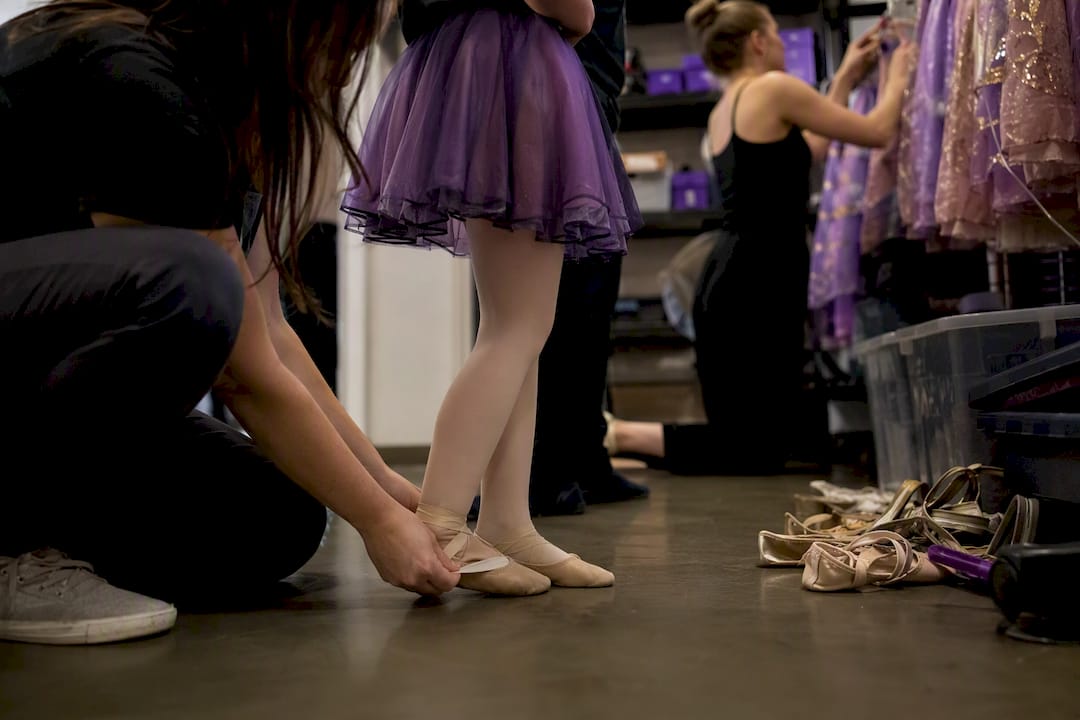
For seasonal staff, hired specifically for a competition season or summer camp, apply the same clock-in requirements as your year-round team. A short-term employment period doesn't exempt anyone from FLSA tracking or overtime rules.
Practical adjustments worth adding to your policy:
- Require manager pre-approval for any week projected to exceed 40 hours, so overtime is planned rather than discovered after the fact
- Track rehearsal and tech-week hours the same way you track regular class hours, with the same clock-in expectations
- Flag seasonal hires in your system so payroll knows to apply the same overtime and retention rules from their first shift
Recital week is exactly when timekeeping errors multiply, since everyone's schedule is in flux and staff are moving between rooms and roles.
Connecting Your Time Clock Policy to Payroll Processing
A time clock policy that doesn't feed cleanly into payroll is just a filing exercise. The point of tracking hours accurately is to get people paid correctly, on time, without your bookkeeper reconstructing a week from memory.
Whatever system captures clock-ins needs to export hours in a format your payroll processor or software can actually use, ideally without manual re-entry, since every manual step is another chance for an error to slip through. That export should carry the same rounding rules and approval sign-offs baked into your policy, so payroll isn't guessing which numbers are final.
Pay period dates, hourly rates, and total hours per employee all need to line up between your time clock records and your payroll runs. If your studio still ties billing and payroll into the same payment collection process, you already understand the value of having one clean record instead of three conflicting spreadsheets.
At minimum, your integration should guarantee:
- Approved hours transfer to payroll without manual retyping
- Rounding and overtime calculations match between the clock system and the payroll run
- Every pay period generates a record you can hand a payroll provider or auditor without reformatting anything
Studios that skip this step usually discover the gap during their first serious audit request, not before.
Employing Minors in Your Studio: What the Time Clock Policy Must Cover
If your studio employs anyone under 18, whether they're a part-time front-desk helper or a junior instructor assisting with younger classes, your time clock policy needs additional layers most adult-only policies skip entirely.
Federal child labor rules under the FLSA restrict both the hours and the types of work minors can perform, and those restrictions vary depending on the minor's age and whether school is in session. A 16 or 17-year-old generally has more flexibility than a 14 or 15-year-old, but neither should be scheduled without your policy explicitly cross-referencing your state's child labor rules, since states frequently impose tighter limits than federal law does.
Your time clock policy should require:
- Written parental consent on file before a minor's first shift, in addition to standard onboarding paperwork
- Clock records that make it easy to verify a minor hasn't exceeded permitted daily or weekly hour limits, especially during the school year
- A manager review step specifically for minor employees' timecards, separate from the standard approval workflow
Get this wrong and the exposure isn't just a wage claim. Child labor violations carry their own penalty structure, and ignorance of a state-specific rule isn't a defense. If your studio regularly hires teen assistants, treat that portion of your policy as its own checklist item, not an afterthought bolted onto the adult employee section.
Getting Staff to Actually Read and Follow the Policy
None of this matters if your staff never actually reads the policy or forgets it exists three weeks after orientation.
Every employee, instructor, front-desk staff, and seasonal hire alike, should sign a written acknowledgment confirming they've received, read, and understood the time clock policy before their first shift. That signature isn't a formality. It's your evidence, if a dispute ever arises, that the rules were communicated clearly and in advance.
Training should walk through the actual mechanics, not just the written rules. Show new staff exactly how to clock in, what a rounding adjustment looks like on their timecard, and who to contact if a punch gets missed. A five-minute walkthrough during onboarding prevents most of the confusion that turns into a payroll dispute two months later.
Refresh the acknowledgment whenever the policy changes. If you update your rounding rule from 15-minute to 5-minute increments, or adjust your overtime approval process, get a new signature. An outdated acknowledgment protects you far less than you'd think.
Keep signed acknowledgments in the same file as the employee's other onboarding paperwork, retrievable the same way your timecards need to be.
Common Compliance Pitfalls Studios Overlook
The two mistakes that come up again and again in studio audits are misclassifying instructors as contractors when they function as employees, and simply not keeping the records long enough to defend a claim when one surfaces. Neither is complicated to fix. What actually protects a studio is a written policy paired with a system that enforces it automatically instead of relying on someone's memory during recital week.
— StudioFlare Team
Set Up Your Studio's Time Clock in StudioFlare
Writing the policy gets you halfway there. StudioFlare gives you the system to actually run it: staff clock in through the platform, hours route through manager approval, and everything exports cleanly for payroll without you rebuilding a spreadsheet every pay period.

If you're still tracking hours across text threads and paper timesheets, the gap between your written policy and what actually happens on the studio floor is probably wider than you think. StudioFlare ties attendance, approvals, and billing into the same dashboard you're already using for registrations, which means one less system to reconcile at month's end. Studios comparing platforms can see how it stacks up as a Mindbody alternative built specifically for dance studio operations, timekeeping included.
Ready to see it running with your own schedule and staff list? Create your studio account and set up your first time-clock rules today.
Sources
- Fact Sheet #21: Recordkeeping Requirements under the Fair Labor Standards Act (FLSA) | U.S. Department of Labor
- Overtime pay | U.S. Department of Labor
- Managing payroll for small dance studios: A 2026 guide | DanceStudioJournal