
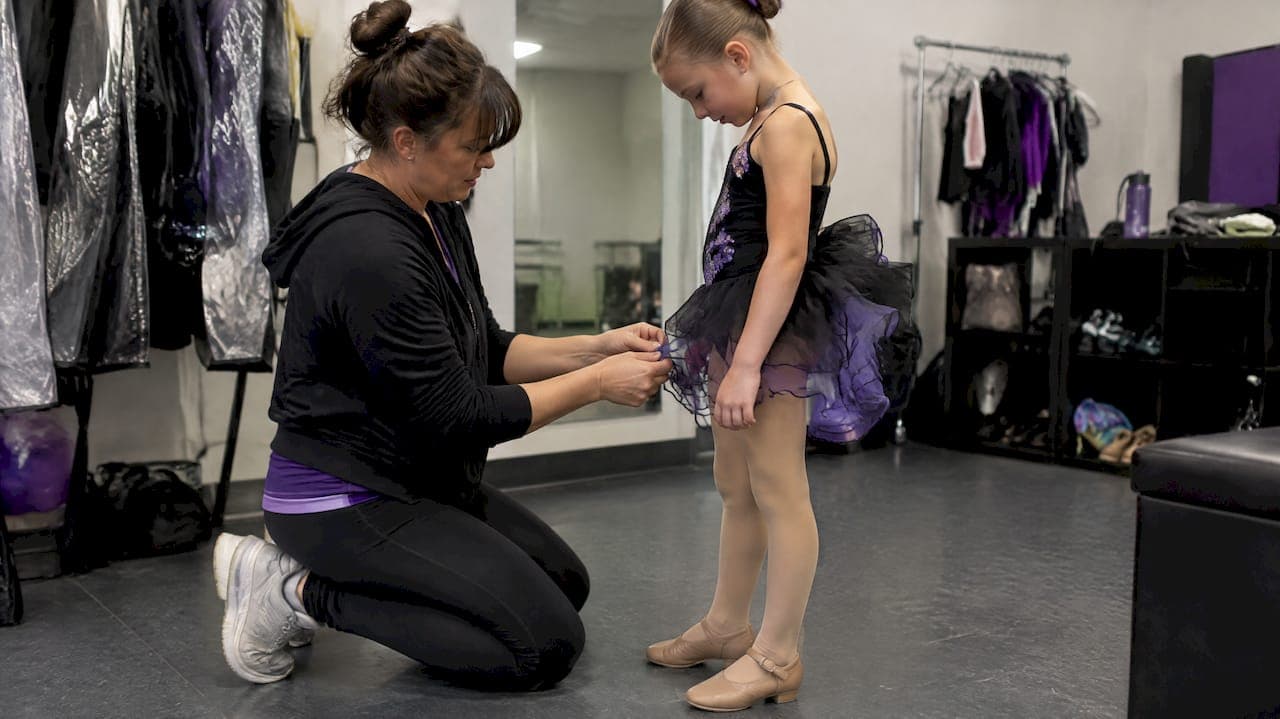
Order recital costumes well in advance before your performance date to allow ample time. That window covers vendor production, group dye lots, shipping transit, and the two weeks you need in the studio for alterations and labeling before curtain. If your timeline is tighter, your fastest fix is calling your vendor directly to confirm rush availability before you place the order, not after.
TL;DR:
- Late deposits can push a group into the next production run, and vendors may refuse or charge heavily for changes after cutting begins.
- Have one trained staff member measure dancers with the same tape and conditions, then match results to the vendor’s chart rather than everyday clothing sizes.
- Request one tracking number and signature confirmation for group shipments, and avoid the cheapest ground option when orders fall within four weeks of performance.
- Inspect every item against the roster on arrival, schedule fittings within days, and label and pack costumes by class before distributing them with signed checklists.
Table of Contents
- Building a Costume Ordering Timeline That Hits Every Milestone
- How to Take Measurements That Actually Match the Costume
- Why Vendors Can't Always Move Your Order Faster
- Planning Around Shipping and Delivery Realities
- From Delivery Day to Dress Rehearsal: Fittings and Distribution
- What to Do When an Order Runs Late or Arrives Wrong
- Turning This Timeline Into a Studio Routine With StudioFlare
- Why Most Costume Delays Are a Calendar Problem, Not a Vendor Problem
- Let StudioFlare Handle the Calendar While You Handle the Costumes
- FAQ
- Sources
Building a Costume Ordering Timeline That Hits Every Milestone
A working timeline treats the performance date as fixed and counts backward. Every deadline exists because the one after it depends on it finishing on time.
- Several weeks out: finalize costume selections and collect deposits from families, since most vendors require payment before cutting fabric.
- Several weeks out: close the measurement window and submit final sizing to your vendor, locking in every dancer's numbers before production starts.
- Several weeks out: receive vendor order confirmation and production start date, including any sample or mockup approval if your order includes custom elements.
- Several weeks out: production runs on the vendor's side. Standard turnaround for group dance costumes varies by vendor, while rush production can compress it but usually adds a fee.
- A few weeks out: costumes ship and arrive. Build in extra days beyond the carrier's stated transit estimate, especially for larger group orders shipped together.
- The final weeks: this is your in-studio buffer for fittings, alterations, and labeling, with nothing left to chance on the vendor side.
The deposit deadline matters more than studios often realize. Vendors that produce costumes in batches need committed order counts before they cut fabric, and a late deposit can bump your whole group to the next production run. That single delay can erase your entire buffer.
Measurement cutoffs work the same way. Once measurements are submitted, most vendors move straight into cutting, and changes after that point become expensive or impossible. A firm internal deadline, a week or two ahead of the vendor's actual cutoff, gives your staff room to catch missing or inconsistent measurements before they become the vendor's problem.
The final two weeks are non-negotiable. This stretch covers fitting appointments, hemming, replacing missing trim, and labeling everything before it goes home with a dancer. Compressing this window is the single most common reason recital week turns chaotic.

How to Take Measurements That Actually Match the Costume
Fit problems rarely come from a bad costume design. They come from inconsistent measurements collected under inconsistent conditions, and they're the most common reason studios end up paying for rush reorders.
A standardized measurement kit removes most of that variance. At minimum it should include:
- A flexible fabric tape measure, kept consistent across every measurer.
- A height and stature chart matching your vendor's sizing categories.
- A measurement form listing bust, waist, hip, inseam, and torso length in the vendor's required units.
- A photo reference sheet showing exactly where each measurement should be taken on the body.
One trained staff member measuring every dancer produces far more reliable data than relying on parents to self-report at home. A single measurer applies the tape the same way every time, which eliminates the cross-measurer drift that causes vendors to receive numbers that don't line up with their own size charts.
Once measurements are collected, match them directly against the vendor's published size chart rather than guessing at a "usual" size. Costume sizing rarely matches off-the-rack clothing sizes, and a dancer who wears a child's size 10 in everyday clothes might fall into a completely different category on a dancewear chart.
For custom embellishments, unusual fabric choices, or any costume built from a new pattern, request a sample or mockup before committing to the full order. A degree program like the BFA in costume design and technology trains students specifically in the pattern drafting and fabric analysis that make mockup review useful, since a proper mockup check catches fit and construction problems before they multiply across every costume in the group.
Pro Tip: Measure dancers in the same undergarments and shoe style they'll perform in, since even a half inch of extra height from heels changes hem length.
Why Vendors Can't Always Move Your Order Faster
Group costume orders aren't built the same way as individual purchases, and understanding why helps explain the deadlines vendors hold firm on.
Most dance costume vendors cut fabric for an entire group at once to guarantee every costume comes from the same dye lot. Dye lots vary slightly between production runs, so costumes cut separately can end up visibly mismatched on stage. That batching is efficient for the vendor, but it also means your order gets folded into their production schedule rather than treated as a standalone rush.
A few vendor behaviors follow directly from this:
- Changes requested after cutting begins are often refused outright or carry a steep rush fee.
- Custom dyeing, beading, or embellishment work adds real days to turnaround because it happens after the base garment is cut.
- Size exchanges after production are usually limited to whatever stock the vendor happens to have on hand, not a true remake.
- Rush production exists for most vendors, but it's priced as an add-on, not a default option.
Programs like the costume technology degree at DePaul University teach the production side of this process directly, translating a design concept into a functional garment through defined technical steps, which is exactly why those steps don't compress easily once they're underway.
Before placing an order, ask your vendor directly: what's your standard turnaround for this costume style, what triggers a rush fee, and what's your policy if a size needs to change after cutting. Those three answers tell you how much risk you're actually carrying.
Planning Around Shipping and Delivery Realities
Shipping is the part of the timeline studios most often underestimate, mostly because a tracking number showing "in transit" feels like progress even when the package hasn't moved in days.
Domestic ground shipping for a group costume order typically takes several business days once it leaves the vendor, but that estimate assumes no seasonal slowdown. Carriers see heavier volume in the fall and around winter holidays, which overlaps with peak recital and competition costume season for many studios. Studios should plan for costumes to arrive well in advance of performance to leave room for alterations and labeling, a buffer that absorbs this kind of carrier delay without threatening your show date.
A few shipping practices reduce risk on group orders:
- Request a single tracking number for the full group shipment so you're not chasing a dozen separate deliveries.
- Ask for signature confirmation on group shipments, since a package left at an unattended studio door is easy to misplace.
- Consider shipping insurance for high-value custom orders, where a lost or damaged shipment would be expensive to replace on short notice.
- Avoid the cheapest shipping tier if your order lands inside your final four weeks, since standard ground service has the least buff against delay.
Expedited shipping costs more, but it's worth it any time your production and shipping combined have eaten into your alteration buffer. Paying extra for two or three guaranteed days is almost always cheaper than an emergency rush order placed after a costume arrives wrong or late.
From Delivery Day to Dress Rehearsal: Fittings and Distribution
Once costumes arrive, the clock shifts from the vendor's hands to yours. A clear sequence keeps this final stretch from turning into a scramble.
- Inspect the shipment immediately against your packing list, checking every costume against the roster before anything leaves the box.
- Schedule fittings within the first few days of arrival, assigning a specific staff member or trained volunteer to each class so fittings don't bottleneck around one person.
- Flag alteration needs on the spot, since minor hemming or a missing snap takes far less time to fix the same week than the week of the show.
- Label every costume with the dancer's name, using color-coded garment bags or permanent tags so pieces don't get separated between fittings and the dressing room.
- Pack costumes by class or routine, not by family, which speeds distribution day and reduces the chance of a sibling mix-up.
- Distribute with a signed checklist, confirming each family received the correct items before they leave the building.
Most alteration tasks at this stage are small: a hem, a shortened strap, a reinforced seam. Each typically takes a staff member or parent volunteer under thirty minutes per costume, but that adds up fast across a full roster, which is exactly why this window needs to be two full weeks and not a rushed weekend. Our costume inventory templates walk through labeling and packing list formats that make this stage repeatable season after season.
What to Do When an Order Runs Late or Arrives Wrong
Even a well-run timeline occasionally hits a snag. What matters is having a set response ready instead of improvising under pressure.
- Contact the vendor immediately for a revised delivery date the moment a shipment misses its expected arrival window, rather than waiting to see if it shows up.
- Check for partial shipments first, since group orders sometimes arrive in separate boxes and a "missing" costume may just be in a second package.
- Identify temporary fixes for minor sizing issues, like adjustable waistbands or safety-pinned hems, that get a dancer through dress rehearsal while a permanent fix is sorted out.
- Communicate early with families, giving them a realistic update rather than silence, since most parents respond better to a clear delay notice than to uncertainty.
- Weigh rush fees against the alternative. A rush replacement costs more, but it's often cheaper than a dancer missing the performance entirely.
Pro Tip: Keep one backup costume per group size on hand when your budget allows it, since a single spare often solves a same-day sizing emergency faster than any vendor can.
A short, specific vendor email works better than a long one: state the order number, the original promised date, and the exact information you need, which is usually just a new ship date. The same clarity applies to parent updates: tell them what happened, what you're doing about it, and when they'll hear from you again.
Turning This Timeline Into a Studio Routine With StudioFlare
A costume ordering timeline only works if someone actually tracks it, which is where most studios lose the thread between a spreadsheet and a group text.
We built calendar and reminder tools around exactly this kind of recurring, deadline-driven workflow:
- Map each milestone (deposit deadline, measurement cutoff, production start, ship date, alteration window) onto a shared studio calendar with automated reminders for staff.
- Collect measurements through a digital form tied to each dancer's registration record, so sizing data lives in one place instead of scattered texts and paper forms.
- Run deposits and staged payments through automated billing, which secures your vendor's production slot without someone manually chasing down checks.
- Track inventory status by class or routine so staff can see at a glance which costumes are ordered, shipped, or distributed.
| Milestone | Owner | StudioFlare tool |
|---|---|---|
| Deposit collection | Studio admin | Automated billing |
| Measurement collection | Class instructor | Digital measurement form |
| Vendor deadline reminders | Studio owner | Calendar and alerts |
| Delivery and labeling tracking | Front desk staff | Costume inventory tracking |
Our recital checklist guide breaks these milestones into calendar entries you can adapt directly, and the same staged-payment approach we describe in our deposit workflow guide applies just as well to costume deposits as it does to class fees.
Why Most Costume Delays Are a Calendar Problem, Not a Vendor Problem
The vendors rarely cause the chaos studios blame them for. Most costume emergencies trace back to a deposit collected a week late, a measurement form that sat in someone's inbox, or a timeline that assumed everything would go perfectly with no buffer at all.
The studios that avoid show-week panic don't necessarily order earlier than everyone else. They just treat the ordering process as a chain of dependent deadlines instead of one big task due "sometime before recital." Protecting the measurement cutoff protects the production start date, which protects the shipping window, which protects your two weeks of alteration time. Skip a buffer anywhere in that chain and the whole thing compresses onto the people least equipped to absorb it: your front desk staff, three days before the show.
If there's one habit worth building this season, it's writing deadlines onto a calendar the moment you place an order, not waiting for a vendor email to remind you.
— StudioFlare Team
Let StudioFlare Handle the Calendar While You Handle the Costumes
Running a tight costume timeline by memory or group text is how deadlines slip. We built the platform so the administrative side of recital season runs itself in the background while you focus on the parts that actually need your judgment.

- Automated billing collects costume deposits and staged payments without manual invoice chasing.
- Calendar reminders flag every ordering milestone, from measurement cutoff to final alteration week.
- Costume inventory tracking keeps sizing data, order status, and distribution records in one place instead of scattered spreadsheets.
- Parent portal messaging keeps families updated the moment a shipping date changes.
Studios comparing options against spreadsheets and group texts, or weighing a switch from a legacy system, can see the full feature set on our studio management platform page. Plans start at 29 USD per month on the Starter tier, with the Pro tier at 49 USD per month, both billed per active student at 1 USD per month each. Create your studio and build this season's costume timeline directly into your studio calendar.
FAQ
How far in advance should I order recital costumes?
Order costumes several weeks before your performance date to cover vendor production, shipping, and a two-week in-studio buffer for alterations and labeling. Tighter timelines are sometimes possible with rush production, but that typically carries an added fee from the vendor.
What is the definition of costume art?
Costume art refers to translating a creative design concept into a functional, wearable garment through technical skills like pattern drafting, fabric analysis, and historical research, as taught in programs like the costume technology degree at DePaul University. It combines artistic vision with the construction knowledge needed to make a design performance-ready.
How do I become a costume designer?
Most costume designers build technical skills through a dedicated training program, such as a BFA in costume design and technology, which covers garment construction, pattern drafting, and production practice. Many programs also include internships or production placements that mirror real costume shop workflows, similar to what's offered in costume design and technology programs built around industry experience.
What should I do if my costume order arrives late?
Contact the vendor immediately for a revised delivery date and check whether the shipment arrived in multiple boxes before assuming an item is missing. Communicate the delay to affected families right away and consider a temporary fix, like an adjustable waistband, to get dancers through rehearsal while a permanent solution is arranged.
How do I take accurate measurements for group costume orders?
Use a standardized measurement kit with a fabric tape measure, a height chart matching your vendor's sizing, and a single trained staff member taking every measurement to reduce variance. Measure dancers in the same undergarments and shoe style they'll wear on stage, then match the results directly to the vendor's published size chart rather than estimating based on everyday clothing size.
Sources
- BFA Costume Design & Technology | Theatre at Illinois
- Costume Technology (BFA) | DePaul University
- Costume design and technology for the creative industries (BFA) | ASU Degree Search