
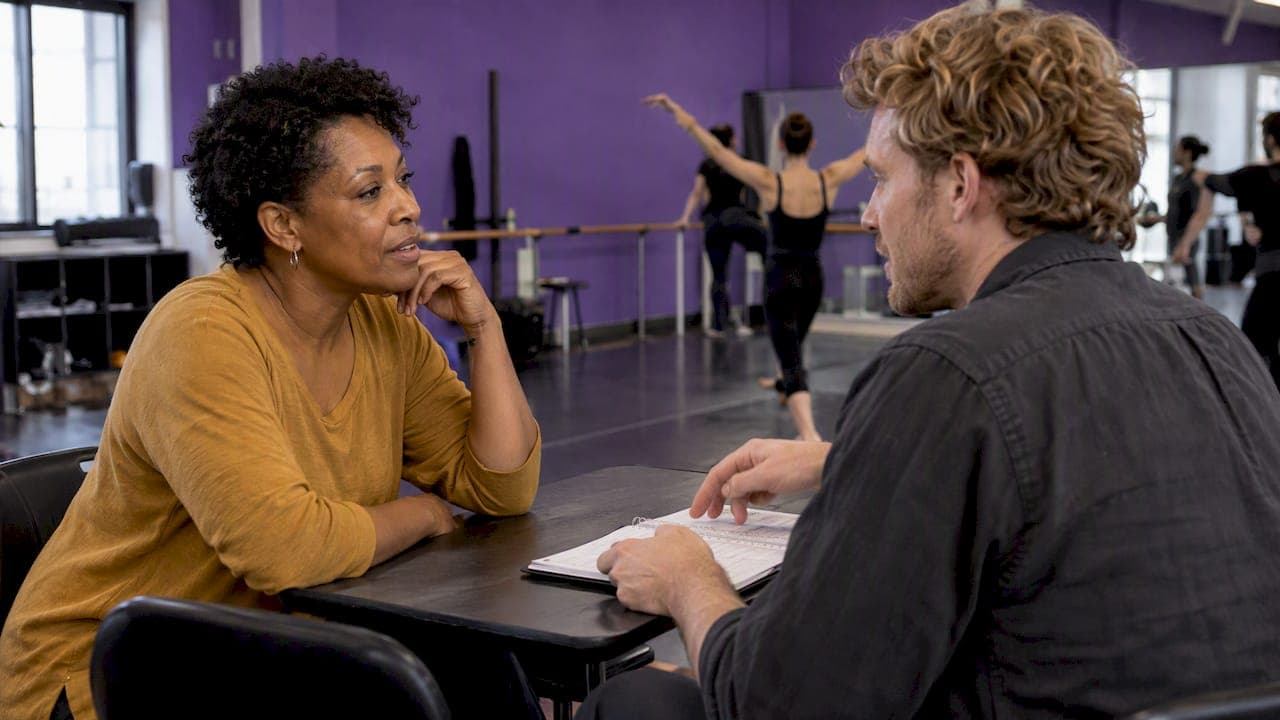
Most U.S. dance teachers are paid somewhere between the mid-$20s and the low $30s per hour, and many studios pay a flat amount per class instead of an hourly wage. The right rate for your studio depends on your region, the teacher's experience, the class type and what the studio can afford to pay. The pay model you pick also decides how much admin, tax and recordkeeping you take on.
This guide is for studio owners setting or revisiting pay, and for teachers checking whether an offer is fair. It covers benchmark numbers, the three common pay models, worked examples, the 1099 vs W-2 question and the payroll records you need to keep.
TL;DR
- National benchmarks cluster around $23 to $27 per hour. PayScale reports an average of $26.26 for dance instructors, and BLS median wages for dancers and choreographers sit close to that.
- Per-class flat rates are the most common arrangement. Hourly pay suits roles that mix teaching with admin, rehearsals or parent meetings.
- Who sets the schedule and controls the work matters more than what you call the arrangement. When you control it, the teacher is usually an employee (W-2), not a 1099 contractor.
- Keep employment-tax records for at least four years, and track hours for any nonexempt employee.
- Software that logs attendance and hours takes most of the spreadsheet work out of each pay period.
Table of Contents
- What dance teachers earn in the United States
- Three ways to pay dance teachers
- A worked example
- 1099 vs W-2: how to classify your instructors
- Payroll taxes and reporting basics
- What a dance studio payroll report should track
- Setting your rates: a simple process
- How we think about teacher pay
- Simplify instructor pay with StudioFlare
- FAQ
- Sources
What dance teachers earn in the United States
Start with the public benchmarks, then adjust for your market.
The U.S. Bureau of Labor Statistics reports May 2024 median hourly wages of $26.73 for choreographers and $23.97 for dancers. These are broad occupational categories, not studio teacher pay specifically, but they give a reasonable floor and midpoint.

PayScale puts the average hourly pay for a U.S. dance instructor at $26.26 as of June 2026, with most people falling between $13 and $55 per hour. That spread is wide on purpose. A 19-year-old assistant teaching a beginner tumbling class and a former company dancer teaching advanced contemporary and running competition choreography are not in the same pay band.
Two things to keep in mind when you read salary pages:
- Annual figures hide the real picture. Most studio teachers do not work a full-time schedule. They teach a few evenings and weekends. A yearly average can make a part-time role look like a full-time one, or the reverse. Always convert to a weekly or per-class figure before you compare.
- Employee wages are not freelance rates. If a teacher bills as an independent business, the rate has to cover their own taxes, insurance, rent for any space, and the unpaid time spent planning and traveling. An employee hourly wage covers none of that.
What moves the number
These are the factors that most often separate a $20 class from a $45 class:
- Region. Rates in a high-cost metro run above rates in a small town. Set your baseline from what other employers in your area pay, not from a national average.
- Experience and training. Years of teaching, performance history and certifications in a technique justify a higher rate.
- Class level and size. Advanced and pre-professional classes, and classes with larger enrollment, usually pay more than a small recreational class.
- Extra duties. Choreography, competition rehearsals, recital prep and substitute coverage are real work. Choreography pay in particular has no consistent industry standard, a point studio-business consultant Kathy Blake makes in her notes on miscellaneous pay rates for dance teachers. She also stresses that keeping loyal faculty takes fair pay and teachers feeling appreciated, including for the extra work.
- What the studio can charge. Payroll is the biggest cost most studios carry, so a rate has to fit your tuition and class sizes, not just the market.
Three ways to pay dance teachers
Most studios use one of three models, or a mix.
Flat rate per class
The teacher earns a set amount for each class taught, whatever the headcount. It is simple to explain and simple to budget. A teacher who leads three 45-minute classes on Tuesday knows exactly what the evening pays.
The weakness is that the flat rate ignores time outside the class. If a teacher arrives 15 minutes early, stays to talk with parents and writes the choreography at home, the effective hourly rate drops. Many owners solve this by setting the class rate so it already covers a typical prep and wrap-up window. We go deeper on the math in our guide to class-based pay rates for dance instructors.
Hourly pay
Hourly pay covers the time a teacher is working, not just the minutes on the floor. It fits roles that split time between classes and other duties: front desk shifts, recital rehearsals, costume prep, parent meetings. It is also the cleanest arrangement for compliance, because the hours are the pay basis and the record.
The tradeoff is that an hourly wage does not reward a teacher whose class grows from six students to sixteen. If you want growth to be shared, you need a second component.
Salary
Salaried roles carry a fixed annual amount. They suit a studio director or head of a program who works a steady schedule with administrative responsibility. A salary is not automatically exempt from overtime. Exemption depends on the duties and pay level the law requires, so confirm it with the Department of Labor's FLSA guidance or your accountant before you assume a salaried teacher never earns overtime.
Revenue share or attendance tiers
Some studios tie pay to enrollment, either as a percentage of the class revenue or as tiers that step up as attendance climbs. This rewards teachers who build their classes, but it makes paychecks less predictable, which matters for part-time teachers who count on a certain amount. A common compromise is a guaranteed base per class plus a bonus once enrollment passes a threshold.
| Model | Best for | Main benefit | Watch out for |
|---|---|---|---|
| Flat per class | Regular weekly classes | Easy to budget and explain | Ignores prep and admin time |
| Hourly | Mixed teaching and admin roles | Matches pay to time worked | Does not reward growing classes |
| Salary | Directors and full-time staff | Predictable for both sides | Overtime rules may still apply |
| Base plus enrollment bonus | Classes you want to grow | Rewards building a program | Paychecks vary week to week |
A worked example
Suppose you want to pay an experienced teacher the equivalent of $30 per hour for a 60-minute class, and the teacher also needs 20 minutes of paid setup and wrap-up each time.
- Paid time per class: 80 minutes, or 1.33 hours.
- Flat rate that matches $30 per hour: $30 x 1.33 = $40 per class.
Now check the studio side. If that class has 10 students paying $60 per month for a weekly class, the class brings in roughly $150 per week across a four-week month ($600 divided by four). At $40 per class, the teacher costs about 27% of that class's revenue before rent, software, insurance and payroll taxes. Add the employer share of payroll taxes and the margin tightens.
That is why small classes need a rate you can defend. Run the same math for each class on your schedule. Classes that fall short either need more students, a higher price or a different pay structure. Our guide to private lesson pricing works through the same logic for one-on-one sessions, which usually carry a higher hourly rate than group classes.
1099 vs W-2: how to classify your instructors
This is the question that causes the most trouble. The label on the contract does not decide it. The facts of the working relationship do.
Under the FLSA, the Department of Labor applies an economic reality test: is the worker economically dependent on the studio, or in business for themselves? Its small entity compliance guide describes the 2024 rule's six factors:
- The worker's opportunity for profit or loss based on managerial skill
- Investments by the worker and the studio
- How permanent the relationship is
- How much control the studio has
- Whether the work is integral to the studio's business
- The worker's skill and initiative
The same page notes that a proposed rule was issued in 2026, so check the Department of Labor page for the current standard before you finalize anything. Your state may also apply a stricter test than the federal one, and the IRS uses its own common-law approach for tax purposes.
In plain terms for a studio:
- Likely an employee: the teacher works the schedule you set, teaches your curriculum in your classes, uses your students and your brand, and works for you year after year. Teaching is central to what your studio sells.
- Possibly a contractor: the teacher runs their own program, sets their own prices and schedule, markets to their own students, rents your space for a fee and carries their own insurance, and may work for other studios too.
Kathy Blake puts it simply: if the owner sets the schedule and is personally liable for students' safety, the people teaching are employees, while someone who rents space and runs their own program may pay a rental fee instead.
Most recurring teachers at a typical studio will be employees. Misclassifying them can lead to back taxes, penalties and interest, so when you are unsure, ask a CPA or employment attorney in your state before you issue a 1099.
Payroll taxes and reporting basics
For W-2 employees, you withhold income tax, Social Security and Medicare, and you pay a matching employer share. The IRS's Publication 15 is the standard reference for the rates, deposit rules and forms. Social Security and Medicare together add up to 7.65% from the employee and 7.65% from the employer.

For contractors, you do not withhold. You report what you paid on Form 1099-NEC. Publication 15 lists the reporting threshold as $600 for earlier years and $2,000 for payments made in 2026. Collect a Form W-9 from every contractor before the first payment so you have what you need at year-end.
At year-end, employers furnish Form W-2 to employees and file it with the SSA by January 31. Put that date on your calendar every year and work backward so your December pay records are clean.
Minimum wage and overtime
The FLSA sets a federal minimum wage of $7.25 per hour, and states with a higher minimum require the higher rate. It also requires time-and-a-half for covered nonexempt employees after 40 hours in a workweek. Teachers who add front desk shifts, rehearsals and recital weekend hours to their classes can cross that line faster than you expect.
A flat per-class rate does not remove these rules. For a nonexempt employee, the total pay for the week still has to meet minimum wage for all hours worked, and the hours have to be tracked. Our walkthrough on setting up dance instructor time tracking shows how to do that in a week.
What a dance studio payroll report should track
A good payroll report answers three questions: who worked, how much, and how much did it cost. At minimum, build it so each pay period shows:
- Teacher name and pay type (hourly, per class, salary, bonus)
- Classes taught, with date, class name and rate applied
- Non-class hours, such as rehearsals, front desk, meetings and training
- Substitute coverage and who the substitute was
- Gross pay, plus any bonus or enrollment tier
- Payroll cost as a share of tuition revenue
That last line is the one owners skip, and it is the most useful. Track it monthly so you see a problem before it becomes a cash flow squeeze. If you are also cleaning up the finance side, our bookkeeping setup guide for dance studios shows how to make payroll flow into your books.
Records you have to keep
The IRS says to keep employment tax records for at least four years. That covers wage amounts and dates, employee details, W-4 forms, tax deposits and filed returns.
The Department of Labor's recordkeeping rules add wage and hour details for covered nonexempt employees: name, address, occupation, daily and weekly hours, the basis of pay, the regular hourly rate and straight-time earnings. If a teacher ever questions a paycheck, those records are what settle it.
Setting your rates: a simple process
- List every role. Group-class teacher, assistant, substitute, private lesson instructor, choreographer, front desk.
- Pick a pay basis for each role. Per class for steady weekly teaching, hourly for mixed duties, a salary for directors.
- Set a baseline from your local market. Check local job postings and what nearby studios pay, then compare against the BLS and PayScale numbers above.
- Add steps for experience. A clear scale, for example by years teaching or by class level, avoids pay disputes and makes raises predictable.
- Price the extras separately. Choreography, competition rehearsals and recital weeks get their own rate so they are never unpaid.
- Test against revenue. Compare payroll to tuition each month. Our figures for typical studios show payroll commonly takes a large share of revenue, so a small rate change adds up.
- Write it down. Give every teacher a one-page pay sheet that states the rate, what it covers and when they are paid.
Fair, written, predictable pay is also a retention tool. Teachers who understand how their pay is built are less likely to leave over a misunderstanding.
How we think about teacher pay
We built StudioFlare for dance studios because we kept seeing the same pattern: teacher pay was calculated at the end of the month from a spreadsheet, a group text and somebody's memory of who covered which class.
That is where mistakes and tension start. When attendance, classes taught and hours live in one place, pay becomes a report you read, not a puzzle you solve. Our platform includes attendance and check-in tools plus a staff time clock and payroll features, so the record of who taught what is already there when the pay period closes.
We also believe in transparent pricing for studios, which is why we charge a flat monthly plan plus a small fee per active student, with no contracts and no setup fees. Studios should not pay for historical records they no longer use, and teachers should not wonder how their pay was calculated.
StudioFlare Team
Simplify instructor pay with StudioFlare
If your teacher pay still runs on spreadsheets, StudioFlare puts attendance, a staff time clock and payroll tracking in the same place as registrations and tuition billing. It is made for dance studios, not generic fitness centers.

Plans are published at studioflare.io: Starter is $29 per month and Pro is $49 per month, plus $1 per active student per month. There is no contract and no setup fee. You can create your studio and see how the time clock and reports work with your own classes. If you are moving from another system, our Dance Studio Pro alternative page explains what the switch looks like.
FAQ
How much do dance teachers make per hour?
Nationally, the average sits in the mid-$20s per hour. PayScale reports $26.26 as of June 2026, with a typical range of $13 to $55. Your local market, the teacher's experience and the class level decide where a specific teacher falls.
Should I pay dance teachers per class or per hour?
Per class works well for steady weekly teaching because it is easy to plan around. Hourly pay is better when a role includes rehearsals, front desk time or meetings. Many studios use both: a per-class rate for teaching and an hourly rate for everything else.
Are dance instructors W-2 employees or 1099 contractors?
It depends on the working relationship, not the label. If you set the schedule, direct the work and the teacher is central to your business, they are likely an employee. A teacher who runs their own program and rents your space is more likely a contractor. Check with a CPA or employment attorney in your state when it is unclear.
How long do I need to keep dance studio payroll records?
The IRS says to keep employment tax records for at least four years. Keep hours and pay-rate records for nonexempt employees as well, since the Department of Labor requires them. Digital records in one system are much easier to produce than scattered files.
Sources
- Dancers and Choreographers, Occupational Outlook Handbook (BLS)
- Dance Instructor Hourly Pay in 2026 (PayScale)
- Miscellaneous Pay Rates For Dance Teachers (Kathy Blake)
- Wages and the Fair Labor Standards Act (U.S. Department of Labor)
- Small Entity Compliance Guide (U.S. Department of Labor)
- 2026 Publication 15 (IRS)
- Depositing and reporting employment taxes (IRS)
- Employment tax recordkeeping (IRS)
- Recordkeeping and Reporting (U.S. Department of Labor)