
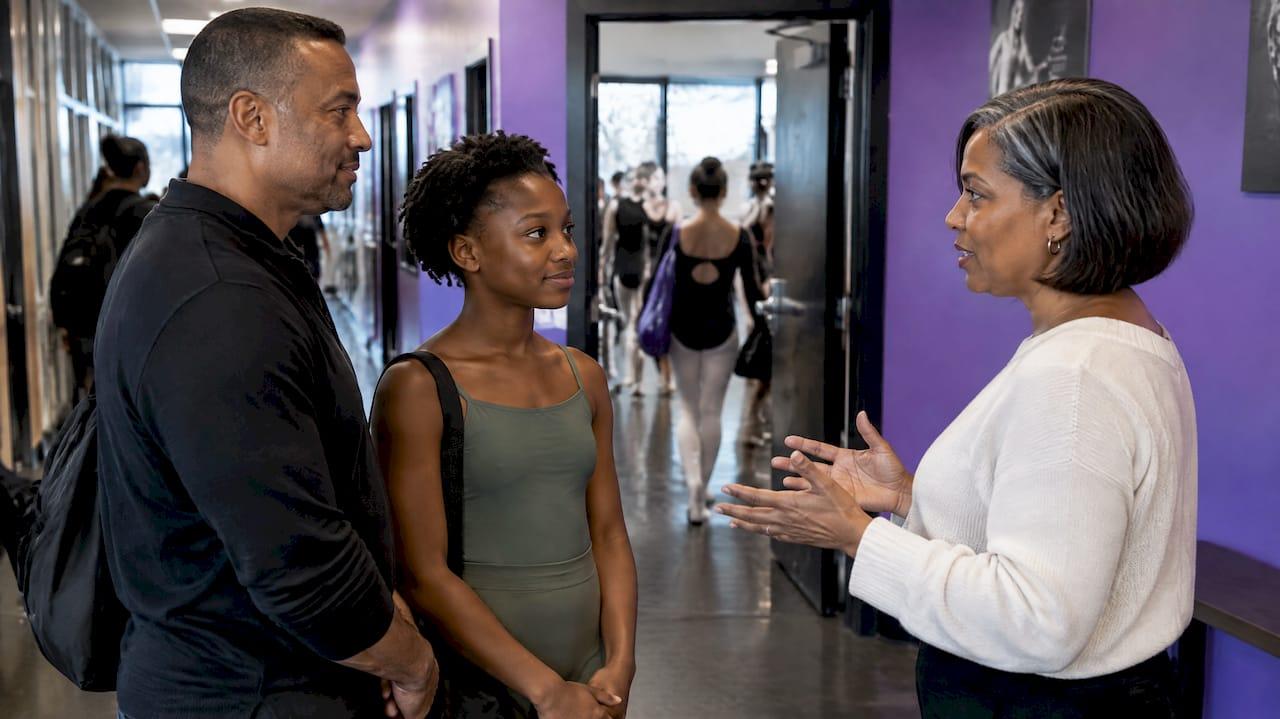
Dance student retention comes down to three things: knowing when families are most likely to leave, reaching them before they decide, and making re-enrolling the easy default. Studios that do this with attendance data, steady parent communication and simple online registration keep more dancers without discounting. Studios that rely on memory, spreadsheets and group texts find out about a departure after the family is already gone.
This guide is written for studio owners, directors, administrators and instructors. It covers why dancers leave, a season-by-season plan, and how to tell whether your efforts are working.
TL;DR
- Dance Teacher reports that 20 to 40 percent of recreational dancers do not return from one season to the next, so retention is a routine, not a one-time campaign.
- The riskiest moments are the first weeks of a new student's first season and the stretch right after the recital.
- Start the re-enrollment conversation before the recital, with a personal invitation from the teacher to the next class or level.
- Attendance and parent communication are your early-warning system: two missed classes in a row is a reason to reach out, not to wait.
- Retention is easier when registration, billing, attendance and messaging live in one place instead of in spreadsheets and group texts.
Table of Contents
- Why dance students leave
- When you are most likely to lose them
- A season-by-season retention plan
- How to tell whether retention is improving
- Why the studio's system matters
- What it costs to run this in one place
- FAQ
- Sources
Why dance students leave
Most departures are not dramatic. Dance Teacher's reporting on attrition points to changing interests, kids trying other activities, losing interest, and financial pressure on parents as the usual reasons. Some students also leave right after the recital, when the goal they were working toward is over and nothing new has been put in front of them.
That list tells you what you can influence:
- Interest fades when there is no next goal. A dancer who knows what level, piece or performance comes next has a reason to come back.
- Families drift when they feel disconnected. A parent who does not know what is happening in class, when costumes are due or what the next season looks like has little holding the commitment in place.
- Cost surprises push families out. Unclear tuition, fees that appear without warning and awkward payment steps turn a minor irritation into a reason to quit. Our parents' checklist for dance tuition fees shows what families expect to see up front.
- Silence goes unnoticed. A student who stops attending rarely announces it. Without attendance tracking, the first sign is a failed payment or an unreturned registration.
You cannot change a child's interest in soccer. You can make dance feel like a place with a clear next step, a connected community and an effortless enrollment process.
When you are most likely to lose them
Three windows deserve a plan.
The first weeks
New families decide quickly whether the studio is a good fit. Early dropouts are usually about the experience: not knowing where to go, who the teacher is, what to wear, or how to reach someone with a question. Our guide to keeping students past class five walks through onboarding, and the 90-day retention playbook lays out what to do in the first three months.
The middle of the season
Energy dips between the excitement of September and the recital push. Attendance slips quietly, parents stop reading messages, and small frustrations (a schedule conflict, a missed email) go unaddressed.
After the recital
The recital is the high point and also the exit door. Dance Teacher notes that some students leave once it is over, and the studio owners it interviews suggest framing the recital as a step into the next season rather than a finale. Whatever you do for re-enrollment has to start well before the final bow.
A season-by-season retention plan
Before the season: make joining and paying simple
Retention starts at registration. A family that fights a clunky form, a paper waiver or a confusing payment arrangement starts the relationship with friction. Online registration with digital waivers and forms, plus automated tuition billing, removes the steps where parents stall. Our guide to dance registration forms and policies covers what to ask for and what to spell out, and the five fast fixes for registration conversion cover the common leaks.
Pricing clarity belongs here too. If you offer sibling discounts, a family tuition cap is one way to keep multi-dancer households from feeling that every added class is a financial penalty.
First month: a welcome that feels personal
- Send a short message to every new family before the first class: where to park, where to check in, what to wear, who the teacher is.
- Have the teacher greet new students by name at the first class and the second.
- Check attendance after week two. A new student who has missed a class gets a friendly note, not a form letter.
Mid-season: communicate on a rhythm
Parents stay when they feel informed. The advice from dance-education writers is consistent: set regular, clearly announced times for parent connection, be clear about how and when you communicate, keep set office hours, and train staff on studio policies so no one hears conflicting answers.
In practice that means choosing a channel for each kind of message:
| Message | Best channel | Why |
|---|---|---|
| Class cancellation or weather closure | Text message | Needs to be seen within the hour |
| Costume dates, recital info, tuition reminders | Email plus parent portal | Parents need to find it again later |
| Progress and goals | Teacher conversation or note | Feels personal |
| Registration for next season | Email, text and portal link | Multiple reminders, one place to act |
Bulk SMS and a parent portal let you send the same message to a whole class or the whole studio in one step. Our practical guide to parent communication goes deeper on cadence and tone.
Keep the goal visible
Dancers who only come once a week need reasons to feel part of something. Studios profiled by Dance Teacher use things like a big-sister, little-sister mentoring program that pairs older students with younger ones, theme weeks, and father-daughter dance-offs. Others run small milestone programs: a skill list with a small prize when a dancer earns the splits, for example. The specifics matter less than the principle: give each student a visible next goal, a person who notices their progress and a group they belong to.

Individual attention is the cheapest of these. A teacher who tells a student and parent, specifically, what improved this month has done more for retention than any discount.
Before the recital: start the re-enrollment conversation
Do not wait for the recital to end. Dance Teacher describes a studio approach that begins before the mid-June recital, with a review of the roster, automatic re-enrollment for fall unless families opt out, and then email, text and phone reminders to choose classes. The same publication's attrition coverage suggests early-spring registration incentives such as preferred class-time requests, early-pay discounts or studio-logo wear, and a personal invitation from the teacher to the next class or level.
A workable version:
- Eight to ten weeks before the recital: open registration for next season to current families first, with a clear deadline and a perk for early sign-up.
- Six weeks out: teachers tell each student, in person, what they will be ready for next year.
- Four weeks out: send a reminder by text and email with a direct registration link.
- Recital week: hand out next-season information alongside costumes and programs.
- After the recital: thank families, share photos or video, and follow up with anyone who has not registered.
If you stream classes or performances, families who cannot attend in person, such as grandparents or traveling relatives, can still watch, which keeps more people invested in the dancer's progress.
How to tell whether retention is improving
You cannot improve what you only notice in hindsight. Track a few numbers on a fixed schedule.
- Weekly attendance. Look at it every week. Flag any student who has missed two classes in a row and reach out within days. Our guides on managing attendance without the clipboard and on using AI attendance insights to cut churn show how to turn check-in data into a short follow-up list.
- Monthly enrollment movement. Record how many students you started the month with, how many joined, and how many left. Divide departures by the starting count to see your monthly churn.
- Cohorts. Note who joined in September and check how many are still enrolled at the winter break, in spring and after the recital. Comparing one year's cohort to the next shows whether changes are working.
- Early-warning signals in communication. Unanswered messages and slow replies are a churn signal in any subscription-style business; the support email metrics that help spot churn early apply just as well to the studio inbox.
A simple worked example: a studio starts October with 200 students, adds 12 and loses 8. Monthly churn is 8 divided by 200, or 4 percent. Run the same calculation every month and watch the trend rather than any single number.
Why the studio's system matters

Every tactic above needs data and speed: who missed class, who has not re-registered, who has an unpaid balance, who has not opened the last message. When that information is spread across spreadsheets, a paper sign-in sheet, a group text and a payment processor, the follow-up does not happen, because nobody can see the whole picture in time.
Putting registration, billing, attendance, messaging and reports in one platform turns retention from a good intention into a weekly routine. It also keeps the investment sensible: revenue tracking shows what a retained family is worth, and our guide to income categories for a dance studio helps you see which programs hold their students.
Our view: retention is a weekly habit
We built StudioFlare for dance studios only, not generic fitness centers, because dance has its own rhythm: seasons, recitals, costumes, parents who handle the logistics and students who commit for years.
We think the studios that keep families are the ones that notice early. That is why check-in and attendance tools, a parent portal, bulk SMS and an AI assistant that answers questions about classes and payments sit in the same place as registration and billing. Staff spend less time reconciling spreadsheets and more time talking to families.
We also think pricing should not punish growth or history. You pay for active students, not for every name you have ever stored, and there is no contract or setup fee.
The recital is a milestone, not an ending. Plan the next season before it, ask families early, and make saying yes take one tap.
StudioFlare Team
What it costs to run this in one place
StudioFlare is subscription software with no setup fee and no contract. The Starter plan is $29 per month and the Pro plan is $49 per month, plus $1 per month for each active student. Livestreaming is available as an add-on feature. If you are moving from another studio system or from spreadsheets, see how StudioFlare compares as a Dance Studio Pro alternative, or look at the plans on the StudioFlare site.
For a studio of 100 active students on the Starter plan, the monthly total is $29 plus $100 in per-student charges, or $129. Retaining even one additional family for a season is worth comparing against that figure, using your own tuition rates.
FAQ
What is a good dance student retention rate?
It depends on your mix of recreational and competitive dancers. Dance Teacher reports that 20 to 40 percent of recreational dancers do not return from one season to the next, so a realistic goal is to beat your own prior year, cohort by cohort. Track it consistently and aim to improve it each season.
When should I ask families to re-enroll?
Before the recital, not after. Studios that open next-season registration in the spring, give current families first access and send several reminders see fewer families drift away over the summer. Pair the reminders with a personal invitation from the child's teacher.
How do I know a student is about to leave?
Watch attendance. Two missed classes in a row, unopened messages and late payments are the usual early signs. Reach out with a warm, specific message from the teacher or front desk and ask whether anything is getting in the way.
Does parent communication really affect retention?
Yes, because parents make the enrollment decision. When they know what is happening, what it costs and what comes next, staying is easy. Set a regular rhythm, use the right channel for each message and make sure every staff member gives the same answers.
Sources
- Ask the Experts: How Do I Reduce Attrition at My Studio? (Dance Teacher)
- How to Turn Your Post-Recital High Into Strong Fall Enrollment (Dance Teacher)
- 6 Ways to Keep Your Once-a-Week Dancers Engaged (Dance Teacher)
- Parent and Dance Teacher Communication (Dance Ed Tips)
- Six Support Email Metrics Managers Must Track to Spot Churn Early (SendSync)